Chapter Two
Featherweight Fights: Carlton Park & the Early Ring Years
From schoolyard scraps and alleyway brawls to bright nights under the lights at Carlton Park, this chapter follows Eli from a scrappy nine-year-old in 1930 to his last featherweight bout on the eve of war.
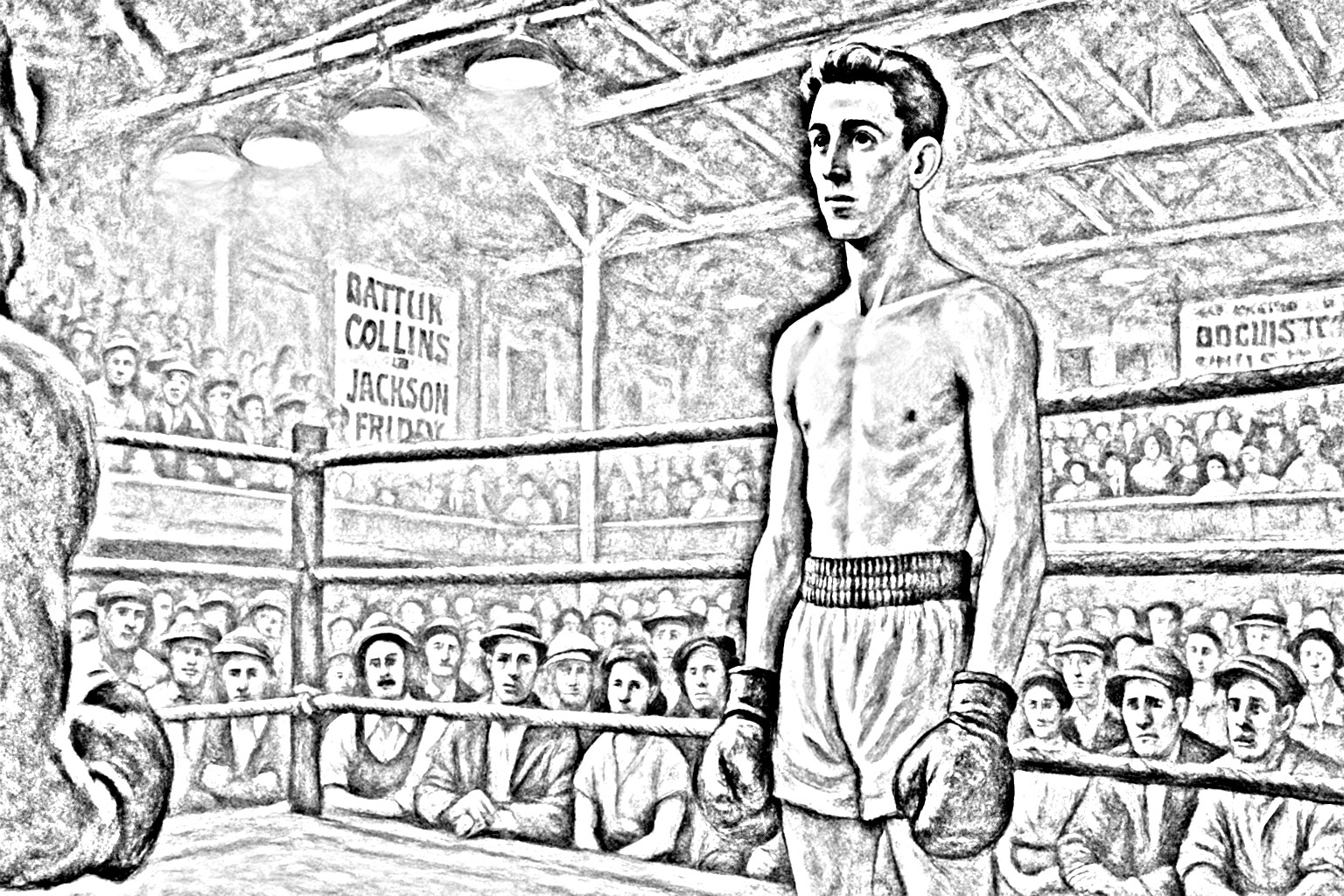
for small purses and big pride.
After-School Fights
By the late 1930s, Eli Hanover was no longer the small boy squeezed into a crowded bed in a Patterson Park rowhouse. He was long-limbed now, all elbows and knees, with a quick grin and quicker hands. Baltimore was changing around him—ships stacking higher along the harbor, men lining up for work at dawn—but for Eli, the city still began and ended on the streets between school, shul and home.
Most afternoons started the same way: a bell, a rush of kids into the narrow streets and somebody looking for trouble. Walking home with a Yiddish accent and a lunch pail made him a target. Some days it was boys who taunted him for being Jewish. Other days it was kids just as broke as he was, hoping to shake a few coins loose from his pockets.
He didn’t go looking for fights, not at first. But he hated the feeling of being cornered—against a brick wall, against a stoop, against the idea that somebody stronger could simply take what little he had. His knuckles toughened before he ever set foot in a real gym. The first lessons were in alleys dusted with coal ash and broken glass, behind corner groceries that smelled of onions and kerosene.
“Keep your hands up, El,” his older brother would mutter, half coach, half co-conspirator. “They can’t hit what they can’t find.” The brothers fought together as often as they fought each other. When bigger boys tested the Hanovers, Eli stepped in—not always because he thought he could win, but because he couldn’t bear to watch family be pushed around.
The City’s Underbelly
Baltimore in the late ’30s was a city of shadows and smoke. Streetcars rattled past blocks of sagging rowhouses. Kids played stickball in streets that doubled as delivery routes for bootleg liquor and numbers runners. Down toward the harbor, the air thickened with tar, salt and hot metal from the shipyards.
Eli saw more of it than most adults realized. He learned which corners to avoid after dark, which bars were friendly to working men and which were run by men who might break your hand as easily as shake it. He heard whispers about bets placed on fights and deals struck between union men and neighborhood toughs.
For a boy coming of age, it was a different kind of classroom. Violence wasn’t abstract; it was woven into the city’s rhythm—the clatter of beer bottles, the slam of a back door, the thud of a fist on a bar top. Where another kid might have folded under that weight, Eli watched and took notes. If the world was going to hit anyway, he might as well learn to hit back with purpose.
families leaning forward for the opening bell.
Finding the Gym
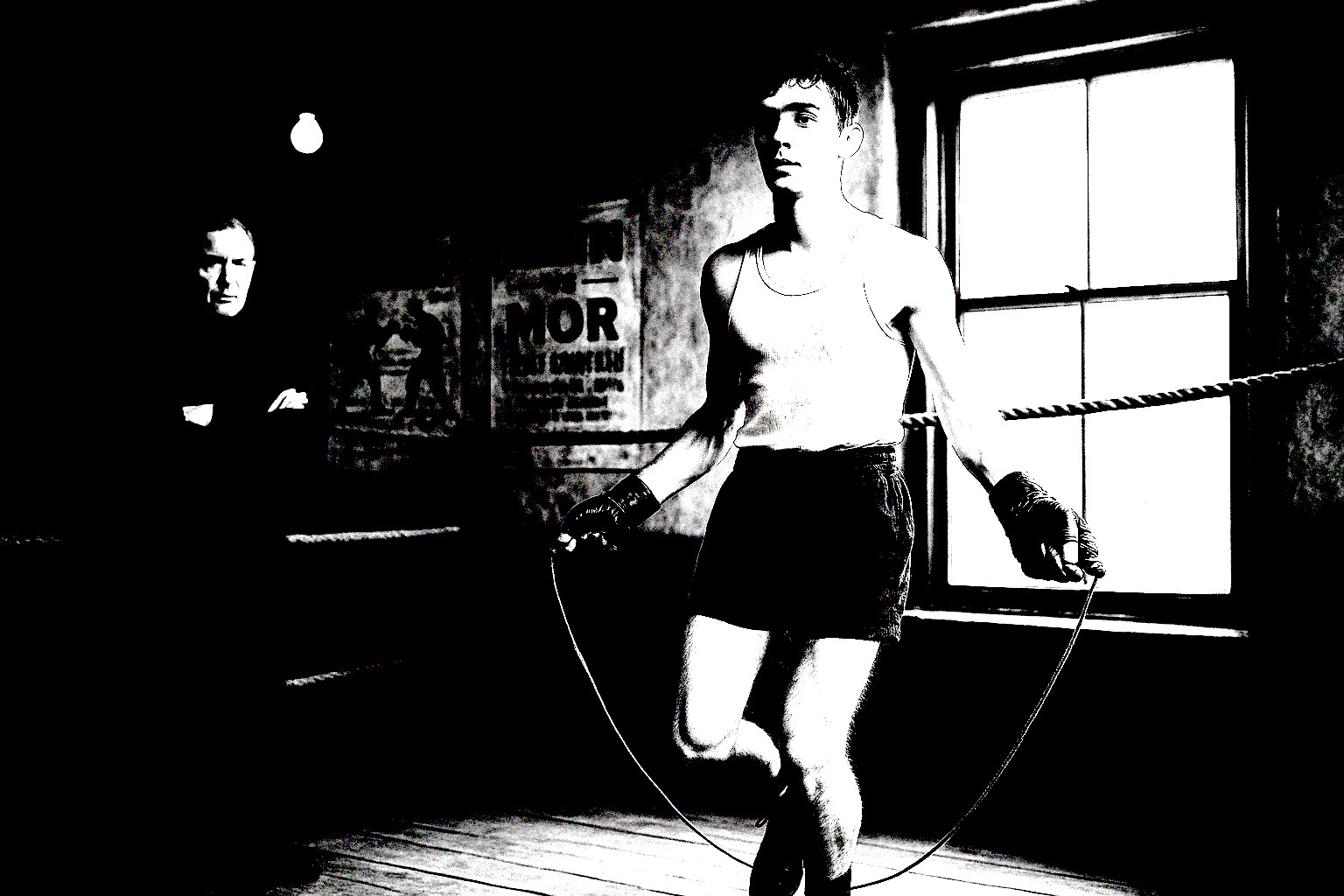
Somewhere between alley scraps and the first Carlton Park card, Eli found his way into a neighborhood gym. It wasn’t much: a converted upstairs room, peeling posters on the walls, ropes patched with tape. The air smelled of sweat, resin and the faint sweetness of liniment. To Eli, it might as well have been a cathedral.
The older trainer sized him up—thin shoulders, restless eyes, scars on his knuckles that didn’t match his years. “Featherweight,” the man said, almost to himself. “You want to learn, kid, or you just wanna swing wild like the rest of ’em?”
“Learn,” Eli answered. And he meant it.
The gym gave his anger and pride a new shape. He learned footwork first—how to step, how to slide, how to pivot so a bigger opponent suddenly felt clumsy. He hit the heavy bag until the leather burned his hands through the wraps. The speed bag taught rhythm; the jump rope taught breath. For the first time, someone corrected him not out of annoyance but because they believed he could be better.
Homework and Hebrew school still tugged at his time, but the gym tugged harder. He began to understand that fighting in the ring was nothing like fighting in the street. In the alley, you swung to survive. In the gym, you practiced so carefully that survival one day might look like grace.
Carlton Park Under the Lights
By 1939, the sports pages carried small-print notices that made Eli’s heart pound: fight cards at Carlton Park—local boys, low purses, big noise. When his name finally appeared, buried half a column down, he read it three times just to be sure.
The first night he fought there, the park felt enormous. The ring sat under bright lamps that attracted moths and attention in equal measure. Wooden benches creaked as men in work shirts and caps settled in, their pockets holding only a few dollars and a lot of opinions.
Backstage, Eli wrapped his hands while the trainer talked low in his ear. “Remember the streets,” the old man said. “But don’t fight like the streets. Fight like you learned to.” When Eli stepped through the ropes, everything got very quiet inside his head. The crowd, the announcer mangling his name, even the bell sat at the edges. Front and center were the other boy, the canvas and the discipline drilled into him upstairs.
The fight was messy and fast—two young men testing how much they could take and what they were willing to give back. Eli felt the shock of the first clean punch he landed, the peculiar calm that followed being hit hard but realizing he could still stand. When the referee raised his hand, the noise crashed down on him like a wave.
Seven wins in eight bouts would follow in that short professional run. The pay was small, barely more than the coins bullies once tried to snatch from him, but the feeling of proving himself under those lights stayed long after the bruises faded.
Pearl Harbor Winter
On December 7, 1941, word of the bombing of Pearl Harbor reached Baltimore like a slap. Radios in rowhouses crackled. Men leaned in close at diners and barbershops, trying to understand how a harbor half a world away could bring war to their own doorstep.
For Eli, the news bent the horizon. The ring that had felt like the center of his world suddenly seemed smaller—a square of canvas in a country racing toward something larger and more dangerous.
The harbor changed almost overnight. More ships, more shifts, more men in uniform. Posters urged sacrifice and service; whispers spread that the Merchant Marine and the Navy needed strong backs and steady nerves. Eli walked past the docks and saw boys not much older than himself loading crates, welding hulls, preparing to ship out.
The noisy underbelly of the city—the gambling, the drinking, the back-room arrangements—didn’t disappear, but now it existed alongside a sharper awareness: bullets and torpedoes were finding American ships, and some of those ships would sail from Baltimore.
Why the Ring Mattered
Looking back, those Carlton Park nights were more than a line on a boxing record. They formed the bridge between a boy defending his lunch money in alleys and a young man ready to face rough seas and U-boat waters.
The discipline of training, the courage of climbing through the ropes, the sense that every opponent carried his own fears and hunger—these stayed with Eli when he traded gloves for seaman’s papers. In a city where so much could be taken from you—wages, dignity, even safety—the ring had given him something no one could steal: the knowledge that, given a fair chance and a pair of decent shoes, he could stand his ground against anyone.
Chapter Two is the story of those years: the dim gyms, the bright lights of Carlton Park, the bruises that healed and the lessons that did not—etched into a young fighter just as the world began to slide into war.